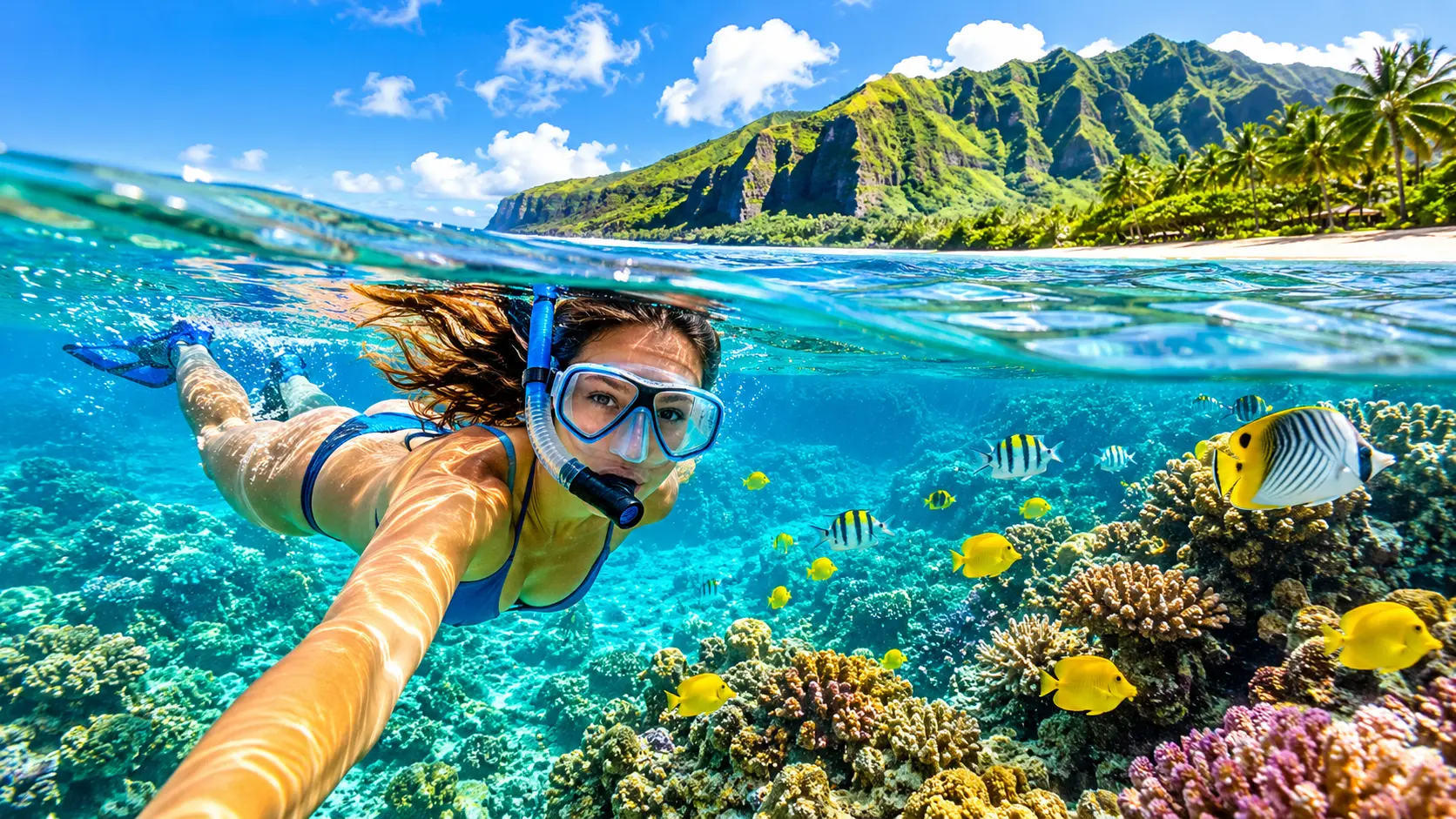
The best places to snorkel share a few things: clear, calm water, healthy reef or interesting wildlife close to the surface, and rules that keep the place that way. A warm, bright reef where you can float and watch is one of the easiest ways to enjoy the ocean, because you do not need training or heavy gear, only a mask, a snorkel, fins and some common sense. That also means a bad choice of place or season can ruin a trip, since rough seas, murky water and crowded boats are all common.
This guide covers fourteen of the best places to snorkel in the world, with a focus on Hawaii, the rest of the USA, Thailand and the best-known reefs. For each place you will find what you can expect to see, when to go, how to get in the water and which local rules apply. Below the main list, there are sections on the clearest water, the top coral reefs, beginners, Europe, snorkelling near you and the habits that protect the reef. We built it at Explore Best Beaches to help you pick the right place for your trip, not just the one with the best photo.
Conditions change with the season and the day, and some places have fixed opening dates, reservations or park fees. Confirm everything with the operator or park before you go, and never snorkel alone.
Quick Comparison: Best Places to Snorkel

| # | Place | Region | Best for | Good months (general guide) |
| 1 | Maui: Molokini and Honolua Bay | Hawaii, USA | Clear water, boat trips | Year-round; Honolua in summer |
| 2 | Oahu: Hanauma Bay | Hawaii, USA | Beginners, easy shore snorkel | Wed–Sun; mornings |
| 3 | Kauai: Tunnels and Poipu | Hawaii, USA | Turtles, reef | Tunnels in summer; Poipu year-round |
| 4 | Florida Keys | Florida, USA | Reefs, shipwrecks | Year-round; calmer in warmer months |
| 5 | Culebra and St John | Puerto Rico and USVI | Clear, calm Caribbean | Dec–Apr for calm seas |
| 6 | Similan Islands | Thailand | Clear water, boulders | 15 Oct 2026–15 May 2027 |
| 7 | Phi Phi Islands and Koh Tao | Thailand | Day trips, easy bays | Nov–Apr (Andaman) |
| 8 | Great Barrier Reef | Australia | Reef scale, turtles, rays | Year-round; stinger-suit season |
| 9 | Belize Barrier Reef | Belize | Hol Chan, nurse sharks | Dec–May |
| 10 | The Maldives | Indian Ocean | House reefs, clear water | Dec–Apr drier |
| 11 | The Red Sea | Egypt | Walls, clear water | Mar–May, Sep–Nov |
| 12 | Raja Ampat | Indonesia | Biodiversity | Roughly Oct–Apr |
| 13 | Galápagos Islands | Ecuador | Sea lions, turtles | Year-round |
| 14 | The Mediterranean | Europe | Easy summer swims | May–Oct |
1. Maui: Molokini Crater and Honolua Bay
Maui has some of the best snorkelling in Hawaii, and it comes in two flavours. Molokini, a crescent-shaped volcanic crater off the south-west coast, is reached only by boat tour, and the water inside is clear with plenty of fish. Honolua Bay, on the north-west coast, is a shore snorkel with coral and turtles in calm summer conditions, when the north swell is small.
Boat tours to Molokini usually leave early in the morning, when the water is calmest and the crowds are lowest. Honolua Bay is often rough or closed to snorkelling in winter, when big swells arrive, so check conditions on the day and follow local advice. Black Rock at Kaanapali is another easy shore option.
Sea turtles are common in Hawaii, and federal law protects them, with a recommended distance of at least 10 feet. Never touch or chase them. Hawaii also bans the sale of sunscreens containing oxybenzone and octinoxate to protect coral, so choose a mineral sunscreen or wear a rash guard.
2. Oahu: Hanauma Bay
Hanauma Bay is a protected volcanic bay on the south-east coast of Oahu, and it is the easiest place on the island for a first snorkel. The inner reef is shallow and calm, with lifeguards and facilities, and it is home to many reef fish and sometimes turtles. Because it is so popular, the bay is carefully managed.
Non-resident visitors need a reservation, which opens online two days ahead at 7 am Hawaii time, and the entry fee for non-residents aged 13 and over is $25. The preserve is open Wednesday to Sunday and closed Monday and Tuesday to give the reef a rest. Every visitor must watch a short conservation video before entering, and the first entry slot is around 6:45 am.
Go early for the calmest water and the smallest crowds, and stay on the shallow inner reef if you are a beginner. Bring reef-safe sunscreen, a rash guard and water shoes for the rocky entry. Gear rentals are available on site. Always check the current rules and status before you plan, because closures for maintenance happen.
3. Kauai: Tunnels Beach and Poipu
Kauai’s snorkelling depends heavily on the season. Tunnels Beach on the north shore has a large fringing reef and a lot of fish and turtles in summer, when the water is calm. In winter, big north swells make the north shore unsafe for snorkelling, so most visitors switch to the south coast.
Poipu Beach Park, on the south shore, has a protected area with consistent conditions all year, and it is a good choice for families and beginners. Turtles and monk seals sometimes rest on the sand, and you should keep your distance and give them room.
Check surf and weather reports each day, and ask a lifeguard or local shop about conditions. Wear a rash guard, use reef-safe sunscreen and never snorkel alone. Kauai’s beaches vary a lot in safety, so choose your spot by the season.
That completes the three Hawaiian islands in this list. For more spots across Maui, Oahu, Kauai and beyond, see our guide to the best places to snorkel in Hawaii.
4. The Florida Keys
The Florida Keys are the best place on the US mainland to snorkel, with the only living coral barrier reef in the continental United States. John Pennekamp Coral Reef State Park in Key Largo, the first undersea park in the country, covers about 70 nautical square miles of reef, mangroves and seagrass. Boat trips take you to reefs such as Key Largo Dry Rocks, where the Christ of the Abyss statue sits underwater.
Further south, Looe Key Sanctuary Preservation Area, near Big Pine Key, is known for protected coral and marine life. Dry Tortugas National Park, about 70 miles west of Key West, is reached only by boat or seaplane and has clear water and a historic fort. Biscayne National Park near Miami is another option for a day trip.
Most snorkelling in the Keys is from boats, so book with a licensed operator and check the weather. Water can be cool in winter, so a rash guard or shorty helps, and conditions are generally calmer in the warmer months. Wear reef-safe sunscreen, and do not stand on or touch coral.
5. Culebra and St John: Puerto Rico and the US Virgin Islands
These two islands are among the best places to snorkel in Puerto Rico and the Caribbean. Culebra, off Puerto Rico’s east coast, has calm, shallow bays and often has turtles in the seagrass. Tamarindo Beach is the usual turtle spot, and Carlos Rosario Beach has easy reef right off the sand. Flamenco Beach is better for the scenery than for snorkelling.
On St John, Trunk Bay has a marked underwater snorkel trail inside Virgin Islands National Park. Waterlemon Cay has a bit more current but more marine life, so it suits confident swimmers.
December to April is the calmest and driest stretch. Bring reef-safe sunscreen, and check the park’s rules and fees before you go. Never touch the turtles or the coral.
6. Similan Islands, Thailand
The Similan Islands, in the Andaman Sea off Thailand’s west coast, are among the clearest places to snorkel in Thailand. The water is warm and bright, and the islands have granite boulders, sandy bays and coral gardens. Day trips run from Khao Lak, and liveaboards go further out.
The islands are a national park with a fixed season. The park is open from 15 October 2026 to 15 May 2027 and is closed outside those dates, so the Similans only work as a plan in that window. Ko Miang and Ko Similan (Island 8) have the most popular snorkel spots. Park fees apply, so confirm the current price with your operator.
Donald Duck Bay, a small sheltered bay with white sand, granite boulders and reef close to shore, ranked tenth in the 2026 World’s 50 Best Beaches list. It is an easy place to combine a beach stop with a snorkel. For other options across the country, see our guide to the best beaches in Thailand.
Choose a licensed boat operator that uses mooring buoys instead of dropping anchors on the coral. Wear a rash guard, and stay clear of boat traffic.
7. Phi Phi Islands and Koh Tao, Thailand
The Phi Phi Islands are the best-known day-trip snorkel stop in Thailand. Pileh Lagoon is calm and clear, and the bays around Koh Phi Phi Leh have colourful reef fish. Maya Bay, made famous by The Beach, was closed to recover from heavy tourism. Under its current rules, visitors cannot swim there, and boats cannot enter the bay. Check the current rules before you go, because this is a managed site.
Many Phi Phi day trips leave from Phuket, so it makes a handy base. For what else to do there, see our guide to the things to do in Phuket, Thailand.
On the Gulf of Thailand side, Koh Tao and the small island of Koh Nang Yuan are excellent for beginners. Shark Bay and Japanese Gardens are popular spots with easy entry.
The Andaman side, including Phi Phi, is best from about November to April. The Gulf side, including Koh Tao, is generally good in the drier, calmer months, so check the monsoon pattern for your dates. Go early to beat the boats.
8. Great Barrier Reef, Australia
The Great Barrier Reef is the largest coral reef system on Earth and a strong answer to where the best place in the world to go snorkelling is. It stretches for more than 2,000 km along Queensland’s coast. Most snorkellers visit from Cairns or Port Douglas, where boats go to the outer reef. You can also use the Whitsunday Islands, Lady Elliot Island or Heron Island for a more remote experience.
Expect hard and soft corals, giant clams, reef fish, turtles and sometimes reef sharks and rays. Boats usually provide gear, and many offer guided snorkels with a lifeguard on board.
Conditions are good year-round. From roughly November to May, marine stingers can be present, and operators supply stinger suits. These suits also protect against sun, so wear one even in clear weather.
9. Belize Barrier Reef
The Belize Barrier Reef is part of the Mesoamerican Reef, the largest barrier reef in the Western Hemisphere. The best-known snorkel stops are Hol Chan Marine Reserve and Shark Ray Alley near Ambergris Caye and Caye Caulker. Here you can see nurse sharks, stingrays, turtles and many reef fish in shallow, warm water.
Most trips are by boat with a licensed guide. December to May is the drier season with the best visibility. As at all marine reserves, you pay a small entry fee, and you should keep a respectful distance from the sharks and rays.
10. The Maldives
The Maldives is known for clear, warm water and house reefs, which means you can snorkel straight from the beach at many resorts. Reef sharks, turtles, rays and colourful fish are common. Some atolls, such as Baa Atoll, are known for manta ray and whale shark sightings, which are seasonal and regulated.
The drier season runs roughly from December to April, with calm seas and good visibility. Rain and rougher water are more likely in the wetter months, but marine life is still active. If you want house-reef snorkelling, pick a resort that is known for its reef, because quality varies a lot from island to island.
11. The Red Sea, Egypt
The Red Sea is a top choice for clear water, steep reef walls and a lot of marine life near the surface. Hurghada, Marsa Alam, Dahab and Sharm El Sheikh all offer both shore and boat snorkelling. Marsa Alam is known for dugongs and turtles at places like Abu Dabbab, and Ras Mohammed National Park has some of the most famous reef.
March to May and September to November are the most comfortable months. Summer is very hot and winter water can feel cool. Check your government’s current travel advice for Egypt before you book, and use a licensed operator.
12. Raja Ampat, Indonesia
Raja Ampat, in West Papua, sits in the Coral Triangle and has some of the highest marine biodiversity ever recorded. You can find very healthy reef, a huge range of fish and many small, colourful species just below the surface. Many jetties and house reefs allow easy snorkelling, and Misool and the Dampier Strait are especially well regarded.
It is remote and more expensive than most places on this list, so it suits experienced travellers. The calmest conditions are roughly October to April. A marine conservation fee is charged to visitors, so confirm the current fee and permit rules with your operator.
13. Galápagos Islands, Ecuador
The Galápagos Islands are one of the best places to snorkel with wildlife. You can swim with sea lions, green turtles, marine iguanas and, with luck, penguins and reef sharks. Spots like Kicker Rock, Devil’s Crown and Gardner Bay are popular.
The water is cooler than in the tropical reefs on this list, so a full wetsuit is a good idea. Rules are strict. The park requires an entry fee, and visits to many sites must be with a licensed guide. Conditions work year-round. Warmer, calmer water comes roughly from December to May, while June to November is cooler with more marine life.
14. The Mediterranean, Europe
The Mediterranean is the best option for Europe. It does not have coral reefs like the tropics, but it has clear water, rocky coves and plenty of fish, and it is easy to reach. Good areas include the Costa Brava in Spain, the Croatian coast, Greece, Sardinia and Malta, where the Blue Lagoon at Comino is a favourite.
May to October is the main season, and the sea is warmest from July to September. Go early to avoid boat traffic in popular coves, and bring water shoes for rocky entries. If you want to build a longer trip around Greek coves, see our guide to the best beaches in Greece.
Clearest Water for Snorkeling: Quick Comparison
Where is the clearest water for snorkeling? Visibility changes with weather and season, but these places are known for some of the clearest water.
| Place | Why it is clear | Best time |
| The Maldives | Little runoff, white sand | Dec–Apr |
| The Red Sea | Dry climate, few rivers | Mar–May, Sep–Nov |
| Similan Islands | Open Andaman water | 15 Oct–15 May |
| Molokini, Maui | Protected crater, open ocean | Year-round (mornings) |
| Belize | Offshore reef | Dec–May |
Top Coral Reefs in the World: Quick Comparison

What are the top 5 coral reefs in the world? Lists vary, but these five are widely named.
| Reef | Location | Known for |
| Great Barrier Reef | Australia | Largest reef system |
| Mesoamerican Reef | Belize and Mexico | Barrier reef in the Caribbean |
| Red Sea Reefs | Egypt and nearby | Walls and clear water |
| Raja Ampat | Indonesia | Record biodiversity |
| Ningaloo Reef | Western Australia | Reef near the shore, whale sharks |
Top Snorkeling Destinations in the World (Top 20)
What are the top 20 snorkeling destinations in the world? Here are the 14 places above plus six more favourites.
| # | Destination | Region |
| 1–14 | The destinations in the main list above | Worldwide |
| 15 | Bonaire | Caribbean |
| 16 | Palau | Pacific |
| 17 | Fiji | Pacific |
| 18 | Ningaloo Reef | Australia |
| 19 | Cozumel | Mexico |
| 20 | Bora Bora | French Polynesia |
Cozumel is better known for reef snorkelling and diving than for its sand, but its Isla Pasión was named the top beach in the world in Tripadvisor’s 2026 Travellers’ Choice awards. That makes it an easy beach day to pair with a reef trip.
Best Places to Snorkel in the US: Quick Comparison

| Place | Best for | Season |
| Maui, Hawaii | Clear water, turtles | Year-round; Honolua in summer |
| Oahu, Hawaii | Beginners | Wed–Sun; mornings |
| Kauai, Hawaii | Turtles | Tunnels in summer; Poipu all year |
| Florida Keys | Reefs, shipwrecks | Year-round; calmer in warmer months |
| St John, USVI | Snorkel trail | Dec–Apr |
| Culebra, Puerto Rico | Calm bays | Dec–Apr |
Best Places to Snorkel for Beginners
The easiest places have calm, shallow, protected water and nearby facilities.
- Hanauma Bay, Oahu: shallow inner reef, lifeguards and rentals.
- Poipu Beach Park, Kauai: protected area and good for families.
- Trunk Bay, St John: marked underwater trail.
- Koh Tao, Thailand: easy bays and calm water.
- Hol Chan, Belize: guided trips and shallow reef.
Practise breathing through the snorkel in shallow water first. Wear a flotation vest if you are not a strong swimmer, and snorkel with a buddy.
If you snorkel from a shore beach, learn the basics of rip currents first. Do not fight a current, swim parallel to the shore, and call for help if you cannot get out.
Best Places to Snorkel in Europe

The Mediterranean is the main answer. Spain’s Costa Brava and Medes Islands, Croatia’s islands, Greece’s coves and Malta’s Comino all have clear water and a long summer season. For a wider look at the Adriatic coast and nearby towns, read our guide to the best places to visit in Croatia.
The Atlantic islands of Portugal’s Madeira and Spain’s Canary Islands are other options, with calm bays and volcanic rock, though the water is cooler. For more of Portugal’s coastline, see our guide to the best beaches in Portugal.
Best Places to Snorkel Near Me
Your best spot may be closer than you think. To find a place near you:
- Search your map app for “snorkelling” or “dive shop” and read recent reviews.
- Ask a local dive shop where to go and which days are best, because they know the conditions.
- Check local park or marine authority websites for rules, closures and water-quality notices.
- Look at lakes, springs and quarries that allow snorkelling, since visibility there can be excellent.
- Start with a guided trip if you are new, and always go with a buddy.
How to Protect the Reef
- Use mineral reef-safe sunscreen or wear a rash guard.
- Never touch, stand on or take coral, shells or marine life.
- Keep at least 10 feet from turtles and give all animals space.
- Do not feed fish.
- Choose operators that use mooring buoys and follow park rules.
- Check the weather and tide, and never snorkel alone.
Final Thoughts
The best places to snorkel combine clear water, healthy reef and good management. Hawaii and Thailand are the easiest to plan, the Great Barrier Reef, the Maldives and Raja Ampat are the world’s best-known reefs, and the Mediterranean is the simple choice in Europe. Match the place to the season, check the local rules, and leave the reef as you found it.
Frequently Asked Questions
Where is the best place in the world to go snorkeling?
There is no single answer, but the Great Barrier Reef, the Maldives, Raja Ampat and the Red Sea are the most often named. For ease and access, Hawaii and Thailand are hard to beat.
What are the best places to snorkel in Hawaii?
Molokini and Honolua Bay on Maui, Hanauma Bay on Oahu, and Tunnels Beach and Poipu on Kauai. Choose by season, because winter swells close many north shores.
What are the best places to snorkel in Thailand?
The Similan Islands (open 15 October to 15 May), the Phi Phi Islands and Koh Tao.
What is the best place to snorkel in Florida?
The Florida Keys, especially John Pennekamp Coral Reef State Park, Looe Key and Dry Tortugas National Park.
What is the best place to snorkel in Puerto Rico?
Culebra, especially Tamarindo Beach and Carlos Rosario Beach.
When is the best time to snorkel?
It depends on the place. Aim for the calm, dry season, and go in the morning when the water is flat and the crowds are small.
Do I need to know how to swim?
Yes, you should be comfortable in water. A flotation vest helps nervous swimmers.